
Trump’s Approval Rating Drops to 33% : What the Latest Poll Reveals
Trump Approval Falls to 33%, Lowest Level of His Presidency: What the New Poll Means
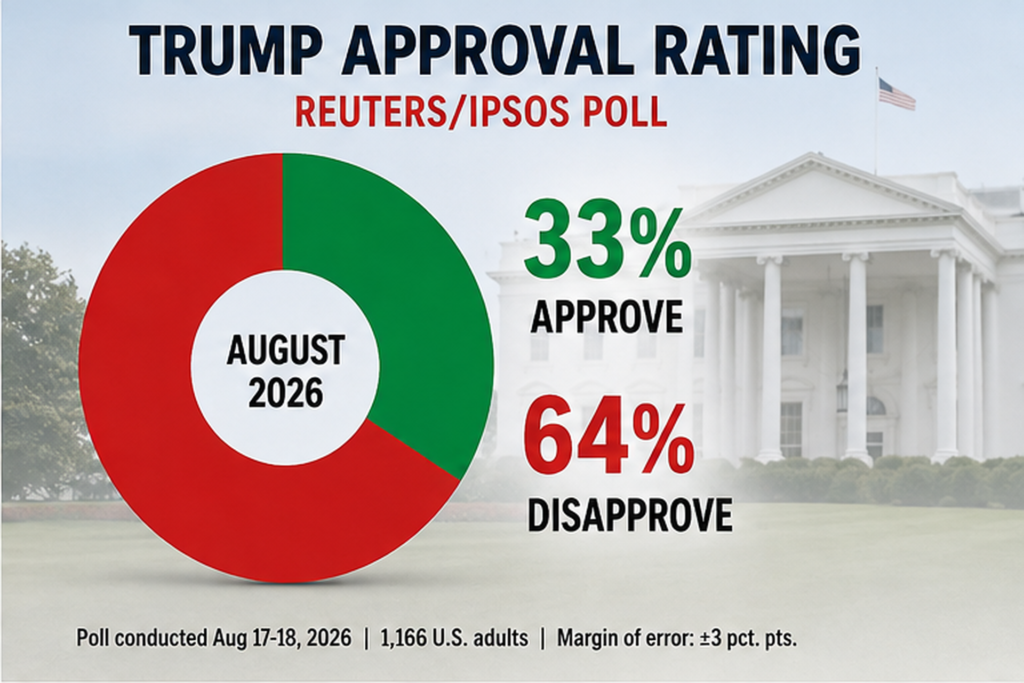
President Donald Trump’s approval rating has fallen to 33%, according to a new Reuters/Ipsos poll, marking the lowest level of approval recorded during his current presidency. The latest figures highlight growing public dissatisfaction with the administration and raise questions about how Americans view Trump’s handling of the economy, foreign policy, and the ongoing U.S.-Iran conflict.
According to the poll, 64% of Americans disapprove of Trump’s job performance, while only 33% approve. His approval rating was 35% earlier in August, meaning his rating has declined by two percentage points in a short period.
Trump’s Approval Rating Hits a New Low
The 33% approval rating represents a significant challenge for the Trump administration. Approval ratings are often used as a broad measure of how Americans feel about a president’s performance.
Trump’s current rating is also notable because it matches the 33% approval level recorded during his first presidency in December 2017, according to the Reuters/Ipsos polling data.
The latest result suggests that Trump is experiencing one of the most difficult periods of public approval of his political career.
However, approval polls can change quickly depending on current events, the economy, international conflicts, and other political developments. A single poll should therefore be viewed as a snapshot of public opinion rather than a permanent measure of Trump’s popularity.
U.S.-Iran Conflict Becomes a Major Concern
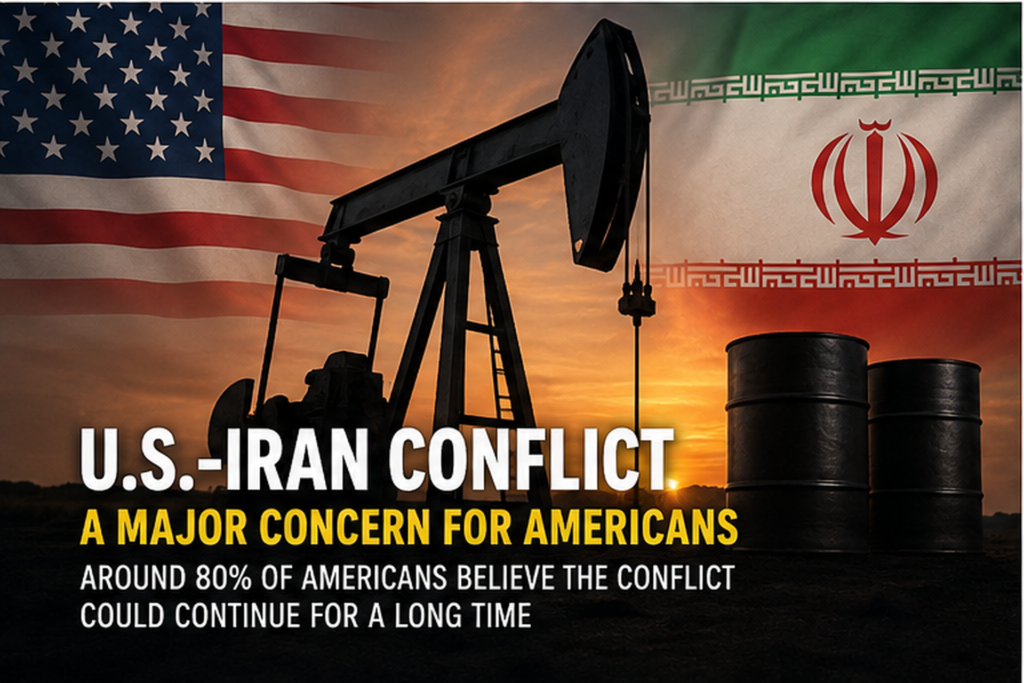
One of the major issues highlighted by the poll is the ongoing conflict involving the United States and Iran.
Many Americans appear concerned that the conflict could continue for an extended period. According to the poll, approximately 80% of respondents believe the U.S.-Iran conflict could continue for a long time.
Foreign conflicts can have a major impact on presidential approval because Americans often evaluate a president based on decisions involving military action, national security, diplomacy, and international relations.
For the Trump administration, the challenge is balancing national-security objectives with concerns about the potential economic and human costs of a prolonged conflict.
Oil and Gas Prices Add Economic Pressure
Another issue connected to the conflict is the price of oil.
International conflicts involving major energy-producing regions can create uncertainty in global oil markets. Higher oil prices can eventually affect gasoline prices, transportation costs, and the prices of other goods and services.
For American consumers, gasoline prices are particularly visible. Changes at the pump can influence how people feel about the economy even when broader economic indicators tell a more complicated story.
This makes energy prices an important political issue for any administration.
U.S.-Iran Conflict Becomes a Major Concern
The economy remains one of the most important issues influencing political opinion in the United States.
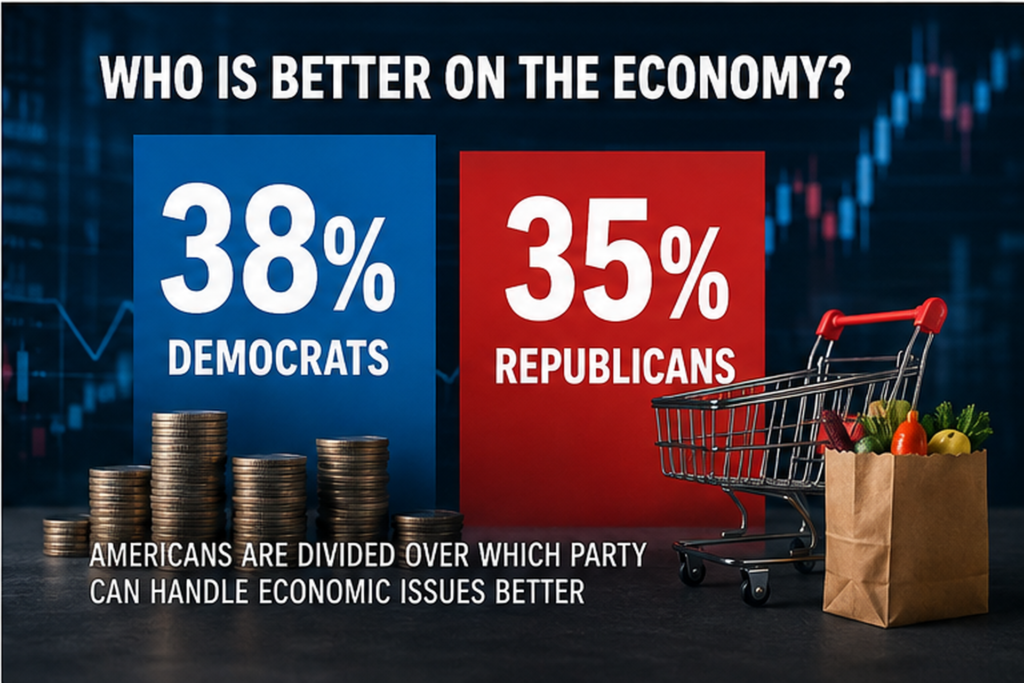
The latest polling indicates that Democrats have gained an advantage over Republicans among Americans who were asked which party is better positioned to handle economic issues.
According to the reported results, 38% said Democrats were better at handling the economy, compared with 35% for Republicans.
Although the difference is relatively small, it is politically significant because economic performance is traditionally one of the strongest factors affecting presidential approval.
Issues such as inflation, wages, employment, housing costs, interest rates, and consumer spending can all influence voters’ perceptions of the economy.
Why Presidential Approval Ratings Matter
A president’s approval rating does not directly determine election results, but it can provide important information about the political environment.
A low approval rating can make it more difficult for a president to build public support for controversial policies. It can also influence how members of Congress, political parties, businesses, and international partners view the administration.
For Trump, the 33% figure comes at a time when his administration is dealing with several major challenges simultaneously.
These include foreign-policy decisions, economic concerns, energy prices, and political disagreements inside the United States.
What the Poll Does—and Does Not—Show
It is important to understand what an approval poll actually measures.
An approval rating generally asks respondents whether they approve or disapprove of the president’s job performance. It does not necessarily mean that everyone who disapproves of Trump opposes every policy he supports.
Similarly, someone who approves of Trump’s performance may disagree with some individual decisions.
Public opinion is often complicated, and voters can have different opinions on different issues.
For example, a person might approve of Trump’s economic policies while disapproving of his foreign-policy decisions. Another voter might have the opposite view.
Therefore, the 33% figure should be interpreted as an overall assessment rather than a judgment on a single policy.
Americans Split on Which Party Can Handle the Economy Better
A new poll shows that Americans remain closely divided over which political party they trust more to handle the U.S. economy. According to the results shown in the graphic, 38% of Americans favor Democrats, while 35% believe Republicans are better equipped to manage economic issues.
The narrow three-point difference highlights how competitive the economic debate remains in the United States. With household expenses, inflation, wages, employment, and the cost of everyday goods continuing to attract public attention, economic policy remains a major concern for voters.
A Difficult Political Environment
The new poll comes at a challenging moment for Trump.
Presidents typically experience fluctuations in approval ratings throughout their terms. Major international events, economic changes, scandals, legislative battles, and other developments can cause approval ratings to rise or fall.
Trump’s political career has also been characterized by unusually strong support among his core supporters as well as strong opposition among his critics.
This political polarization means that changes among independent voters can become particularly important.
If dissatisfaction grows among independent voters, it could have broader political consequences because independents can play an important role in elections.
Could Trump's Approval Rating Recover?
Yes. Presidential approval ratings can recover.
A low approval rating does not necessarily mean that a president will remain unpopular for the rest of the term. Improvements in economic conditions, successful diplomatic developments, lower energy prices, or positive political developments could potentially change public opinion.
On the other hand, continued economic difficulties or an extended international conflict could place additional pressure on the administration.
Much will depend on developments over the coming months.
What Happens Next?
The most important question is whether the 33% approval rating represents a temporary decline or the beginning of a longer-term trend.
Future polls will help determine whether Trump’s approval rating continues to fall, stabilizes around its current level, or begins to recover.
Political analysts will likely pay particular attention to several areas:
- The U.S.-Iran conflict and its duration
- Gasoline and oil prices
- Inflation and household costs
- Employment and wages
- Trump’s handling of the economy
- Public opinion among independent voters
- Congressional approval of Trump’s policies
If several of these areas improve simultaneously, Trump’s approval rating could potentially rise. If conditions deteriorate, however, his approval could face additional pressure.
Final Takeaway
The new Reuters/Ipsos poll represents a significant warning sign for President Donald Trump. With 33% approving and 64% disapproving, his approval rating has reached its lowest point of the current presidency.
The results come amid concerns about the U.S.-Iran conflict, oil and gasoline prices, and the broader economy. The findings also show that economic issues remain highly competitive between the two major U.S. political parties.
Still, one poll does not determine Trump’s political future. Approval ratings can change as circumstances change, and future surveys will be necessary to determine whether this is a temporary decline or part of a larger trend.
For now, however, the 33% approval rating is an important indicator of the political challenges facing the Trump administration and will likely remain a closely watched number in upcoming U.S. political coverage.